
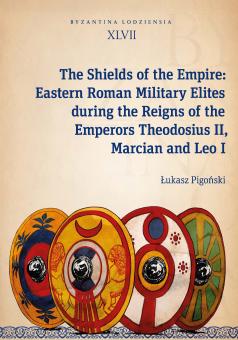
The Shields of the Empire: Eastern Roman Military Elites during the Reigns of the Emperors Theodosius II, Marcian and Leo I: No. XLVII
Streszczenie
The subject of interest of this monograph are the Eastern Roman military elites and their influence on the functioning of the Empire during the reigns of the emperors Theodosius II, Marcian and Leo I (408–471). The author explores the process of the re-establishment of the military elites after the revolt of Gainas, their growing importance thanks to the wars of the early reign of Theodosius II, and the dissatisfaction of the generals with the emperor’s foreign policy towards the end of his rule. The resulting opposition brought together such different characters as Flavius Zeno, Aspar or Apollonius consolidating the group. It is argued that the following reign of Marcian was in many ways the realization of the political goals of the military elite. Over its course, Aspar, who outlived other commanders, became the most powerful man in the Empire, being able to single-handedly choose the next emperor – Leo. The author explores how the power of Aspar and his family manifested throughout Leo’s reign, and how the general and the emperor ended up quarrelling, and how their conflict escalated. The monograph challenges many preconceptions established in the scholarship, especially, the common in the older literature, framing of the conflicts between the emperors and the generals as driven by ethnic factors, but also re-evaluates more modern ideas that seek to explain the dynamic of those events in terms of dynastic or religious struggles. The author claims that the primary motivation of the military elites was political in nature, and it was to protect the Empire, however, the conflicts between the generals and the emperors were due to differences in how it needs to be done. The military elites were generally opposed to engaging limited military resources in risky expeditionary campaigns, and it seems they did not perceive the attempts to help the Western Roman Empire as their duty, only feeling responsible for the security of the part centred around Constantinople. Przedmiotem rozważań tej monografii są wschodniorzymskie elity wojskowe i ich wpływ na funkcjonowanie Imperium za czasów panowania Teodozjusza II, Marcjana i Leona I (408–471). Autor bada proces odtworzenia się elit wojskowych po buncie Gainasa, wzrostu ich znaczenia dzięki wojnom z początku panowania Teodozjusza II, oraz rosnącego niezadowolenia wodzów z polityki zagranicznej cesarza pod koniec jego rządów. To właśnie ta opozycja była czynnikiem zjednującym tak różne postacie jak Flawiusz Zenon, Aspar czy Apolloniusz, w wyniku czego ostatecznie doszło do wykształcenia się jednolitej grupy, jaką były elity wojskowe. Następujące po rządach Teodozjusza II panowanie cesarza Marcjana było pod wieloma względami urzeczywistnieniem ich politycznych ambicji. W ciągu tych wydarzeń, Aspar, dzięki temu, że przeżył pozostałych znaczących dowódców stał się najpotężniejszą osobą w Imperium. W wyniku tego mógł samodzielnie wybrać następcę tronu - Leona. Autor bada, w jaki sposób władza Aspara i jego rodziny przejawiała się podczas panowania cesarza, a także jak doszło do kłótni się pomiędzy cesarzem i wodzem, a następnie eskalacji ich konfliktu. Praca krytycznie podchodzi do wielu założeń przyjętych w nauce, zwłaszcza powszechnego w starszej literaturze wyjaśniania konfliktów między cesarzami a wodzami jako motywowanych czynnikami etnicznymi, a także przewartościowuje współczesne koncepcje, które próbują wyjaśnić dynamikę opisywanych wydarzeń w kontekście sporów dynastycznych lub religijnych. Autor twierdzi, że motywacje elit wojskowych należy przede wszystkim rozumieć w kategoriach politycznych, zaś wodzom zależało na tym by skutecznie chronić Imperium przed zagrożeniami. Konflikty między wodzami a cesarzami wynikały głównie z różnicy zdań co do tego, jak ten cel osiągnąć. Przedstawiciele elit wojskowych byli, co do zasady, przeciwni angażowaniu ograniczonych możliwości militarnych w ryzykowne ekspedycje wojskowe, wydaje się też, że nie poczuwali się w obowiązku do pomocy Cesarstwu Zachodniorzymskiemu, czując się odpowiedzialnymi wyłącznie za bezpieczeństwo ich własnej ojczyzny - części cesarstwa podległej władzy Konstantynopola.
Collections

Poza zaznaczonymi wyjątkami, licencja tej pozycji opisana jest jako http://creativecommons.org/licenses/by-nc-nd/4.0/