
¡Bienvenido a cabaretera! Konteksty kulturowe meksykańskiego musicalu
| dc.contributor.author | Racięski, Bolesław | |
| dc.contributor.editor | Fiołek-Lubczyńska, Bogumiła | |
| dc.contributor.editor | Żakieta, Katarzyna | |
| dc.contributor.editor | Żebrowski, Mateusz | |
| dc.date.accessioned | 2022-08-30T16:54:18Z | |
| dc.date.available | 2022-08-30T16:54:18Z | |
| dc.date.issued | 2016 | |
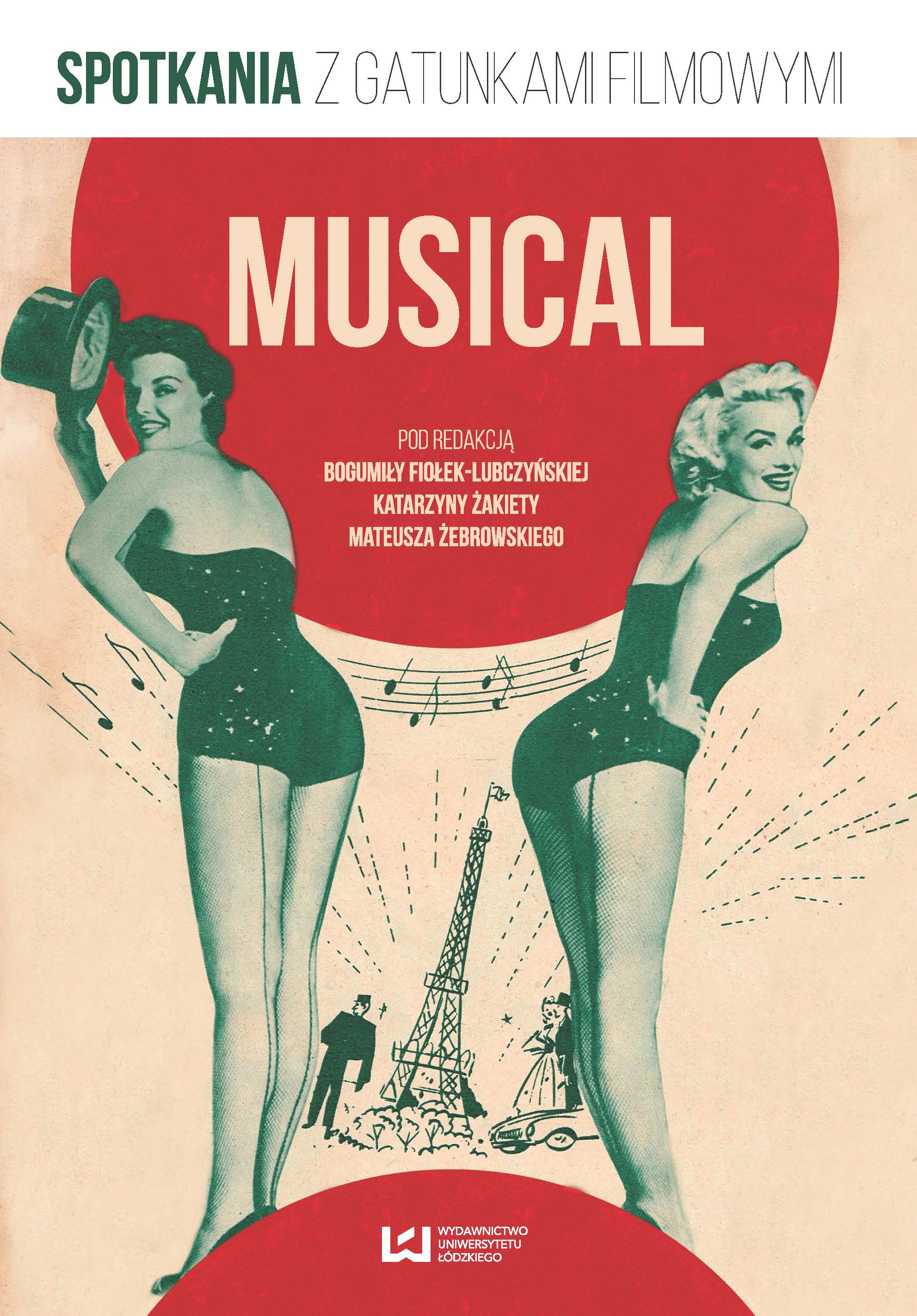
| dc.identifier.citation | Racięski B., ¡Bienvenido a cabaretera! Konteksty kulturowe meksykańskiego musicalu, [w:] Musical. Spotkania z gatunkami filmowymi, Fiołek-Lubczyńska B., Żakieta K., Żebrowski M. (red.), Wydawnictwo Uniwersytetu Łódzkiego, Łódź 2016, s. 147-156, https://doi.org/10.18778/8088-445-8.12 | pl_PL |
| dc.identifier.isbn | 978-83-8088-445-8 | |
| dc.identifier.uri | http://hdl.handle.net/11089/43028 | |
| dc.description.abstract | Celem artykułu jest ukazanie charakterystycznych elementów meksykańskich „cabareteras”. Był to popularny w latach czterdziestych nurt filmów muzycznych opowiadający o kobietach, które – zwykle oszukane i wykorzystane przez mężczyzn – trafiają do kabaretu, będącego jednocześnie domem publicznym. „Cabareteras” to niezwykle ważne zjawisko w historii meksykańskiego filmu: produkcje te położyły fundamenty pod zmianę paradygmatu krajowej kinematografii przez obalenie lub przekształcenie popularnych stereotypów dotyczących kulturowego przedstawienia kobiety. Omawiane filmy były jednocześnie ważnym elementem w edukacji meksykańskich obywateli podczas procesu gwałtownej modernizacji państwa i niekontrolowanych migracji ze wsi do miast. Artykuł ukazuje wagę „cabareteras” poprzez umiejscowienie ich w istotnych kontekstach kulturowo-polityczno-społecznych. | pl_PL |
| dc.description.abstract | The aim of the paper is to show the distinctive elements of Mexican “cabareteras”. It was a popular trend in the musical films of the forties which told the stories of women who – usually cheated on and used by men – go to the cabaret, which was also a brothel. “Cabareteras” are the extremely important phenomenon in the history of the Mexican film: it laid the foundations for a paradigm shift in the national cinematography by shaking or outright shattering of popular cultural stereotypes about women. “Cabareteras” were also an important factor in the education of Mexican citizens during the process of rapid modernization of the state and uncontrolled migration from rural to urban areas. The article shows the importance of cabareteras by placing them in relevant cultural and socio-political contexts. | pl_PL |
| dc.description.sponsorship | Udostępnienie publikacji Wydawnictwa Uniwersytetu Łódzkiego finansowane w ramach projektu „Doskonałość naukowa kluczem do doskonałości kształcenia”. Projekt realizowany jest ze środków Europejskiego Funduszu Społecznego w ramach Programu Operacyjnego Wiedza Edukacja Rozwój; nr umowy: POWER.03.05.00-00-Z092/17-00. | pl_PL |
| dc.language.iso | pl | pl_PL |
| dc.publisher | Wydawnictwo Uniwersytetu Łódzkiego | pl_PL |
| dc.relation.ispartof | Fiołek-Lubczyńska B., Żakieta K., Żebrowski M. (red.), Musical. Spotkania z gatunkami filmowymi, Wydawnictwo Uniwersytetu Łódzkiego, Łódź 2016; | |
| dc.rights | Attribution-NonCommercial-NoDerivatives 4.0 Międzynarodowe | * |
| dc.rights.uri | http://creativecommons.org/licenses/by-nc-nd/4.0/ | * |
| dc.subject | cabaretera | pl_PL |
| dc.subject | Meksyk | pl_PL |
| dc.subject | musical | pl_PL |
| dc.subject | cabaretera | pl_PL |
| dc.subject | Mexico | pl_PL |
| dc.subject | musical | pl_PL |
| dc.title | ¡Bienvenido a cabaretera! Konteksty kulturowe meksykańskiego musicalu | pl_PL |
| dc.title.alternative | ¡Bienvenido a cabaretera! The Cultural Context of Mexican Musicals | pl_PL |
| dc.type | Book chapter | pl_PL |
| dc.rights.holder | © Copyright by Authors, Łódź 2016; © Copyright for this edition by Uniwersytet Łódzki, Łódź 2016 | pl_PL |
| dc.page.number | 147-156 | pl_PL |
| dc.contributor.authorAffiliation | Uniwersytet Jagielloński | pl_PL |
| dc.identifier.eisbn | 978-83-8088-446-5 | |
| dc.contributor.authorBiographicalnote | Bolesław Racięski – absolwent prawa i filmoznawstwa Uniwersytetu Jagiellońskiego, doktorant na Wydziale Zarządzania i Komunikacji Społecznej UJ. Interesuje się przede wszystkim kinematografiami latynoamerykańskimi w ich kontekstach społeczno-kulturowych, a także filmowymi kuriozami, niezwykłościami i dziwactwami. Miłośnik „lucha libre” i „sopa de tortilla”. | pl_PL |
| dc.references | Hershfield J., Mexican Cinema / Mexican Women, 1940–1959, Arizona 1996. | pl_PL |
| dc.references | Mora C. J., Mexican Cinema: reflections of a society, 1896–2004, Jefferson 2005. | pl_PL |
| dc.references | Paz O., Synowie Malinche [w:] Labirynt samotności, Kraków 1991. | pl_PL |
| dc.references | Pedelty M., Musical Ritual in Mexico City, Austin 2004. | pl_PL |
| dc.references | Posada P. B., The Only Defense is Excess: Translating and Surpassing Hollywood`s Conventions to Establish a Relevant Mexican Cinema, “Anagramas”, nr 18. | pl_PL |
| dc.references | Skoczek M., Migracje ludności, [w:] Dzieje kultury latynoamerykańskiej, red. M. F. Tiemey, Silver sling-backs and Mexican melodrama: Salón Mexico and Danzón, „Screen” 1997, nr 38 (4). | pl_PL |
| dc.references | Williams L., Something Else besides a mother: Stella Dallas and the Maternal Melodrama, „Cinema Journal” 1984, nr 24 (1). | pl_PL |
| dc.references | Allá en Rancho Grande, reż. F. de Fuentes, 1936. | pl_PL |
| dc.references | Amor de la calle, reż. E. Cortázar, 1950. | pl_PL |
| dc.references | Amor salvaje, reż. J. Orol, 1949. | pl_PL |
| dc.references | Aventurera, reż. A. Gout, 1949. | pl_PL |
| dc.references | Danzón, M. Novaro, 1991. | pl_PL |
| dc.references | Distinto amanecer, reż. J. Bracho, 1943. | pl_PL |
| dc.references | Kobieta z portu, reż. A. Boytler, 1933. | pl_PL |
| dc.references | Las abandonadas, reż. E. Fernández, 1944. | pl_PL |
| dc.references | Salón México, reż. E. Fernández, 1949. | pl_PL |
| dc.references | Santa, reż. A. Moreno, 1932. | pl_PL |
| dc.references | Soledad, reż. M. Zacarías, 1947. | pl_PL |
| dc.identifier.doi | 10.18778/8088-445-8.12 | |
| dc.discipline | literaturoznawstwo | pl_PL |
| dc.discipline | sztuki filmowe i teatralne | pl_PL |
Files in this item
This item appears in the following Collection(s)

Except where otherwise noted, this item's license is described as Attribution-NonCommercial-NoDerivatives 4.0 Międzynarodowe